Tunisia: Deliberate Remote Transfers: An Additional, Unofficial Punishment and Persecution of Prisoners of Conscience and Their Families
This post is also available in:
 English
Paris, June 9, 2026
The Free Voice Organization is following with grave concern the continued policy of isolating a number of prisoners in prisons far from their families’ residences. This effectively prevents them from exercising their right to regular family contact and imposes heavy financial, health, and psychological burdens on their families, burdens that are unjustified by any legal or humanitarian provision and can only be understood as the de facto authorities’ continued policy of persecuting prisoners of conscience and their families.
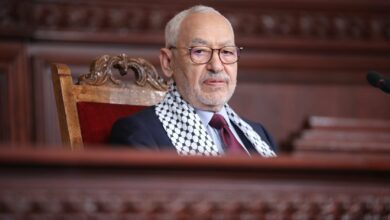
In this context, the distressing situation of Professor Ezzedine Hazgui stands out. He suffers from a serious illness and a clear decline in his health, rendering him unable to endure the hardship of traveling long distances to visit his son, Jawhar Ben Mbarek, who is imprisoned in Essirs prison. This effectively deprives both father and son of their natural and human right to communication and visits.
This situation is not isolated but rather part of a growing phenomenon where a number of prisoners are being separated from their families and social environments, making prisoners’ visit a theoretical right rather than a practical one.
International standards emphasize the necessity of placing prisoners, whenever possible, in institutions close to their families’ places of residence to preserve family ties and facilitate social reintegration. Here, we remind the de facto authorities of their following obligations:
- United Nations Standard Minimum Rules for the Treatment of Prisoners (Mandela Rules – 2015)
-Rule 59 explicitly states that prisoners should be placed in an institution close to their home or place of rehabilitation, taking into account the requirements of detention.
*International Covenant on Civil and Political Rights
-Article 17, which stipulates the protection of family life
-Article 23, which stipulates the protection of the family as the natural unit of society
*Convention on the Rights of the Child
-Article 9, which states that if a parent is imprisoned, the child has the right to maintain regular contact with them.
Deliberate and prolonged transfer constitutes an additional, unofficial punishment. The right to family life and the preservation of human dignity are fundamental principles of the international human rights system. These rights cannot be circumvented through administrative procedures that ultimately punish families and burden them with hardship and suffering. According to established legal principles, punishment is personal and its effects should not extend to parents, spouses, or children.
While expressing our full solidarity with Professor Ezzedine Hazgui and his family, and with all the families of prisoners of conscience in Tunisia, we consider the insistence on keeping prisoners in places far from their families to be a practice that contradicts the requirements of human dignity and the legal and moral obligations of the state, and turns the deprivation of liberty into a means of tormenting both the prisoner and his family.
Therefore, we:
1- Condemn the continued policy of geographically isolating prisoners from their families and the grave humanitarian consequences thereof.
2- Call for respect for the prisoners’ right to maintain family ties and for enabling their families to visit them under reasonable and accessible conditions.
3- Demand a review of the cases of prisoners held in institutions far from their families’ residences and for efforts to bring them closer to their families whenever legal and exceptional impediments no longer exist.
4- Hold the relevant authorities responsible for the human suffering and the health and psychological repercussions on prisoners and their families resulting from these practices.
Respect for human dignity does not end at the prison gates, and maintaining family ties is not a privilege granted by the authorities at will, but rather an inherent right that must be preserved and protected, especially when it concerns elderly and ill parents whose only remaining hope is to see their children and check on their well-being.